
Searching the Sanford Court Docket
Sanford has no court portal of its own. The village offers no separate online docket, because a Sanford matter reaches the courts only through Midland County once someone files it. From there, the county system takes over. A citation or case marked D75 can be checked through MiCOURT's D75 search route. Enter the court number when you have it. Then compare the court, the case type, the status, and the public history before you decide a result is really your Sanford case. A name alone can mislead. Matching several fields is what turns a hit into the right docket entry.
- Read the Sanford notice or correspondence for a village reference, court name, or case number.
- If it is a village matter, ask the village clerk for the local record or status.
- If it gives a D75 number, search the official district-court route.
- Use Court Display for a public hearing setting and compare it with the case history.
- Call the court when an appearance, copy, or current result must be confirmed.
An empty result screen is not the end of the story. The item may still sit with the village, may not have reached the web yet, may belong to another court, or may simply be closed to public view. Any one of those explains the blank.
Sanford Village Clerk Fallback
For anything Sanford keeps at the village level, start with the Village Clerk. The office sits at Village of Sanford, P.O. Box 30, Sanford, MI 48657, and answers the phone at (989) 488-4578 ext. 11. Email works too: clerk@villageofsanford.com. Ordinance matters, public notices, and local administrative records all live here. So does any question where the paper in hand names no court case at all.
Ask for the record by ordinance number, title, date, or a plain description. Hang on to any village reference number, since it speeds things up. The clerk can tell you whether a record stayed with the village. The clerk can also say whether a citation went on to a Midland County court docket instead. Sanford posts no reliable online ticket-payment or municipal-court search form. The clerk fallback is the honest route.
The Village of Sanford official website lays out the village's municipal services. It also covers contacts and public notices.
The village's own pages back up the contact route described above. They do not create an independent Sanford court search, and no official page claims one.
Sanford Municipal Court Basics
There is no separate Sanford court. County and state judiciary materials list none, because Sanford is a village. That municipal identity still matters. The first paper you hold may be an ordinance question, a piece of correspondence, a meeting record, or a local notice. None of those becomes a MiCOURT entry by itself. The county court route opens only when a matter is filed with the judiciary.
For scale, the 2020 Census counted 813 residents in Sanford. That makes it the smallest of Midland County's three incorporated places. Size does not decide jurisdiction. The village clerk keeps village-held material, while a district, circuit, probate, or juvenile court office keeps the judicial file that matches its case type.
Sanford Portal Gap
The missing Sanford docket portal is itself useful routing information. It does not mean the village has no internal process. It means a searcher should not expect search fields, a payment form, or a municipal calendar. No official source provides those. The dependable path is manual. Take village records to the village clerk. Take filed district-court matters to D75 through MiCOURT. Take certification or inspection requests to the courthouse when online display falls short.
This three-way fallback also tells you what to do when a link fails. Start with the document's own source and number. Ask the office that holds it whether the matter stayed local or was filed in court. A shared date, address, or name cannot turn a village record into a court docket on its own.
Known limitation: Sanford offers no stable municipal-court or ticket-payment portal in the official source set. Check with the village directly before relying on any future online option.
Court Dates and Settings in Sanford
A Sanford court date is a judicial setting, not a village meeting. A case with a D75 number or another county-court filing points to MiCOURT Court Display. That is the public calendar for hearing questions. Its public rows show Party Name, Time, Hearing Info, Case Number, and CTN. Use the case number. It links that setting to the case history and the court office behind it.
| Village date | A council, planning, or administrative date, not a court setting. |
|---|---|
| Court date | A scheduled judicial event that belongs to the case-holding court. |
| Case number | The bridge between a Sanford filed matter and D75 public history. |
| Hearing info | A concise calendar label that is not a case outcome. |
| Confirmation | The court division's current answer when appearance timing matters. |
Calendar entries can shift, and the display can run incomplete. If an appearance is required, call D75 at (989) 832-6700 or the relevant division.
Sanford Meetings Are Not Court Dates
Sanford village council, planning, and public-comment meetings are municipal business. They are not arraignments, civil-infraction hearings, probate proceedings, or any other court setting. The confusion is understandable. Village agendas name the same community and often use a venue Sanford residents know well. But the office that keeps the record, the purpose, and the legal effect all differ.
A Court Display row is a judicial setting tied to a court case. A village agenda is meeting information. Neither can confirm the other. So do not swap a meeting date for a court date, and do not read a court history into an agenda item. Take each question to its own document and office.
Sanford Traffic Tickets
Start with the village clerk for any Sanford ordinance or citation question. One exception: the paper shows a 75th District Court case number. A D75 number means the court is the right place. Follow the notice's instructions and pull the public history through MiCOURT. For traffic and civil infractions at the county level, the District Court Traffic Division handles those court matters. It can be reached at (989) 832-6714. The village posts no online payment option and no dedicated Sanford ticket search. Keep the two kinds of records straight. A village reference stays a village record. A citation filed with the court becomes a court record. That distinction keeps Sanford traffic information accurate rather than invented. Note: Keep the original Sanford notice alongside any later D75 case number. That way the village and court records can be matched without guesswork.
Sanford Jerome Township Venue
Sanford's agenda materials sometimes list village council meetings at Jerome Township Hall, 737 Beamish Road, Sanford. That explains why a Sanford public notice may point to a township venue. It changes nothing about the courts. A township hall meeting is not a court hearing. No Sanford court records move into a township court. The village's ties to Jerome Township are local context, not a shift in court jurisdiction. So when a public calendar result shows a familiar Sanford-area location, check what kind of calendar it is first. Village meeting records stay with the village. Court settings stay with the court that scheduled them. That keeps a venue name from doing legal work it was never meant to do. The Midland County municipalities page gives the official local-government background for Sanford.
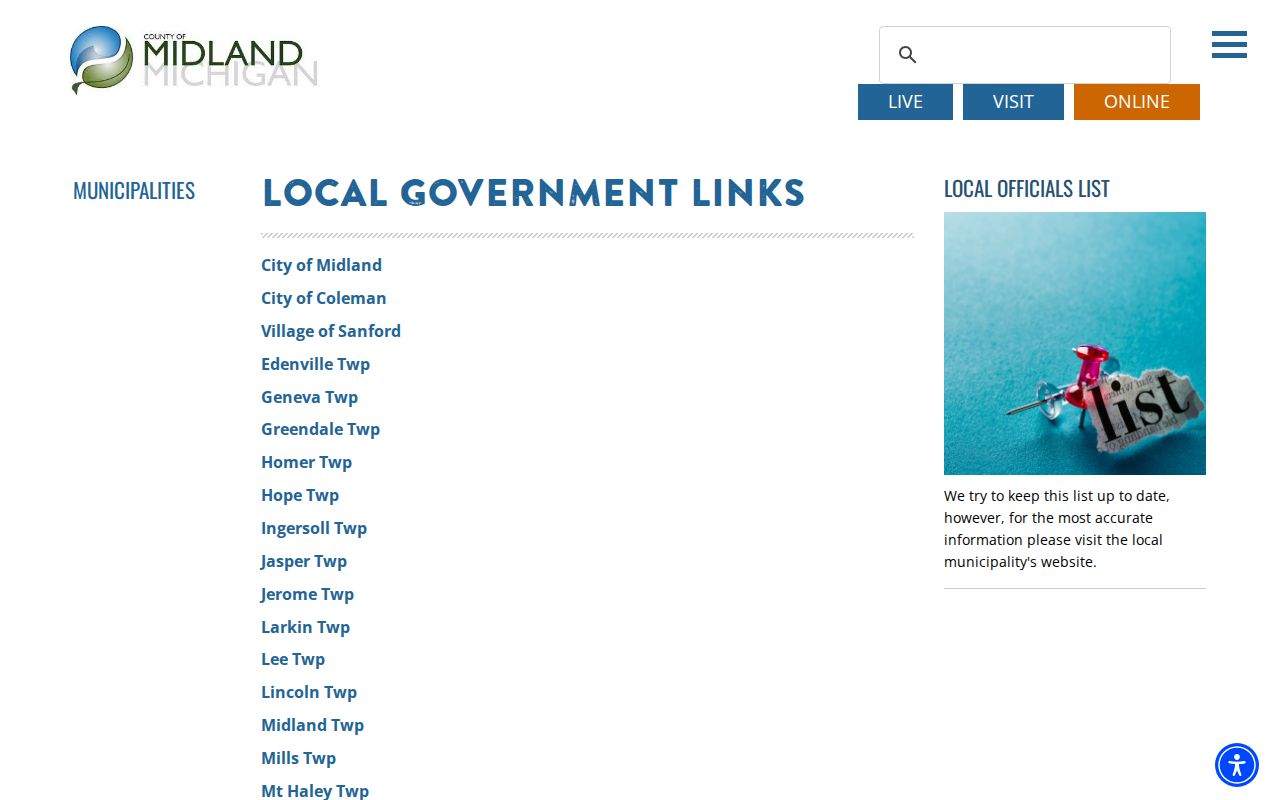
The county municipalities page places Sanford in its local-government context without creating any separate Sanford judicial venue.
Where Sanford Cases Go
Sanford records do not follow a one-court municipal flow. The practical path is: Sanford village record or notice › 75th District Court if a civil infraction or district case is filed › 42nd Circuit Court for circuit-level matters or a district appeal. Probate and juvenile cases go to their own county court office and often have different public-access expectations.
Jurisdiction, not the Sanford address, decides where a case goes. D75 handles traffic, civil infractions, misdemeanors, small claims, and limited civil cases. C42 takes felony trials, domestic relations, larger civil matters, and district appeals. A document held by the village only joins this path once a filing happens. The county-level overview on the Midland County Court Docket page explains the court structure. The village-first route for Sanford still applies.
Sanford Citation Court Hand-off
A Sanford notice reaches D75 only after a filing, and that shapes the workflow. Ask the village clerk first about the ordinance, notice, payment instructions, or citation status. If the clerk confirms a court citation was filed, switch to the court case number. Then take the D75 route. If the paper carries only a village reference, the village keeps the record. This manual hand-off is deliberate. It avoids false expectations about what an online search can deliver. A court case can be searched by its court number. It may have a public history. A village record needs a village request. If neither office turns up the matter, ask what record category or date range would help. Don't assume no record exists.
Sanford Court Record Access Rules
Michigan Court Rule 8.119 opens court case records to public inspection unless a statute, rule, or court order restricts access. What appears online is generally the public case number, party names, and case history, not document images. For a specific filed matter, the court clerk can explain inspection, ordinary-copy, certified-copy, and on-site terminal options.
Sanford access boundary: Village-held records go to the Village Clerk. A court-filed record goes to D75 or the applicable Midland County court. The online display is not the full official file.
Juvenile, sealed, suppressed, mental-health, and other protected categories may never show up in a public search. A missing online entry can mean limited access, not that no court record exists. Ask the court about the procedural basis and any redacted public route that might be available.
Sanford Records Without a Search
Sanford shows why a public-record process can't rest on a portal alone. The clerk-first route works when the item is municipal. The D75-first route works when a court number exists. Neither promises an instant online result, but both are concrete. The document, the office, and the record type lead the way. Sanford counted 813 residents in the 2020 Census table. Small size is no excuse for guessing about court access. The village clerk is the local contact. After a filing, the county court holds the record. That split is the working foundation for a Sanford docket search, and it supports a measured request when online information runs thin. Calendar information deserves the same care. A village agenda can announce a local meeting. A D75 Court Display row can show a judicial setting. One never replaces the other. A Sanford court request should carry the case number. That, or enough public detail to identify the court file, will do. A village request should name the ordinance, notice, date, or administrative record. Clear requests make the lack of a dedicated Sanford portal manageable.