
Searching the Midland County Court Docket
Midland County does not run every case history through one clerk counter. Match the matter to the court first. The 75th District Court, usually called D75, handles limited-jurisdiction civil, criminal, traffic, and small-claims matters. The 42nd Circuit Court, C42, takes major civil, felony, domestic-relations, and appellate-to-circuit cases. Probate and Juvenile each keep their own records. For public searching, the layer to use is MiCOURT Case Search. It is informational. It is not the official court record. It does not promise every case category or document image.
Use a case number whenever you have one. Without one, use a name or business-name search. It can be narrowed by court, case type, and date. Check the court and the filing date before assuming a result belongs to the case you meant. A no-result screen can reflect spelling, a different court, or restricted access. It can also reflect an older criminal matter affected by the portal filter. Or the record may simply predate the online system.
- Identify whether the matter belongs in C42, D75, Probate, or Juvenile.
- Open MiCOURT Case Search and read its public-access notice.
- Search by case number, or use a name or business name with the available filters.
- Compare the court, case type, filing date, status, and case history before relying on the result.
- Contact the clerk that keeps the case for inspection, a document, or a certified copy.
The Midland County Courts overview identifies the local courts that share the courthouse.
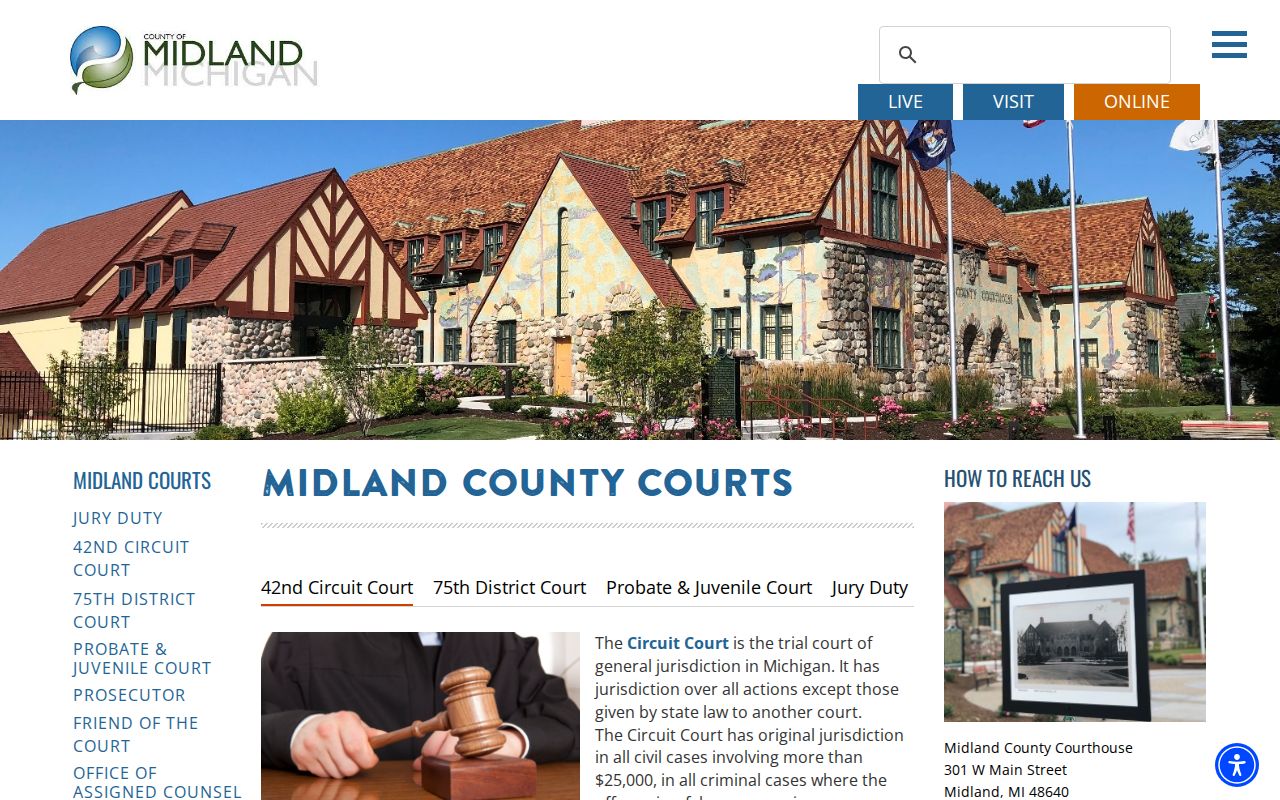
Convenient, yes. But the court division and the case type still decide which clerk controls a Midland County court docket.
Choosing a Midland County Court
Pick the court before you search. That one habit prevents a common dead end in a Midland County docket search. D75 is the practical first route for traffic civil infractions, adult misdemeanors, and civil suits at or below its jurisdictional limit. It also covers arraignments, warrants, and felony preliminary examinations. Small claims and summary proceedings run there as well. Felonies move to C42 after bindover. C42 also handles civil cases above $25,000. Domestic relations and appeals from the lower court sit there too. Probate and Juvenile cover separate subject matter, with different public-access expectations.
A city-issued parking notice or municipal administrative record is not automatically a court docket. Midland County's three incorporated places all use the county court system once a matter is filed there. But each city or village can remain the first keeper of a municipal record. That same distinction explains a lot. A broad name search helps less than a court citation or an assigned case number.
The official 75th District Court page describes the court's Civil, Criminal, Traffic, and Probation divisions.
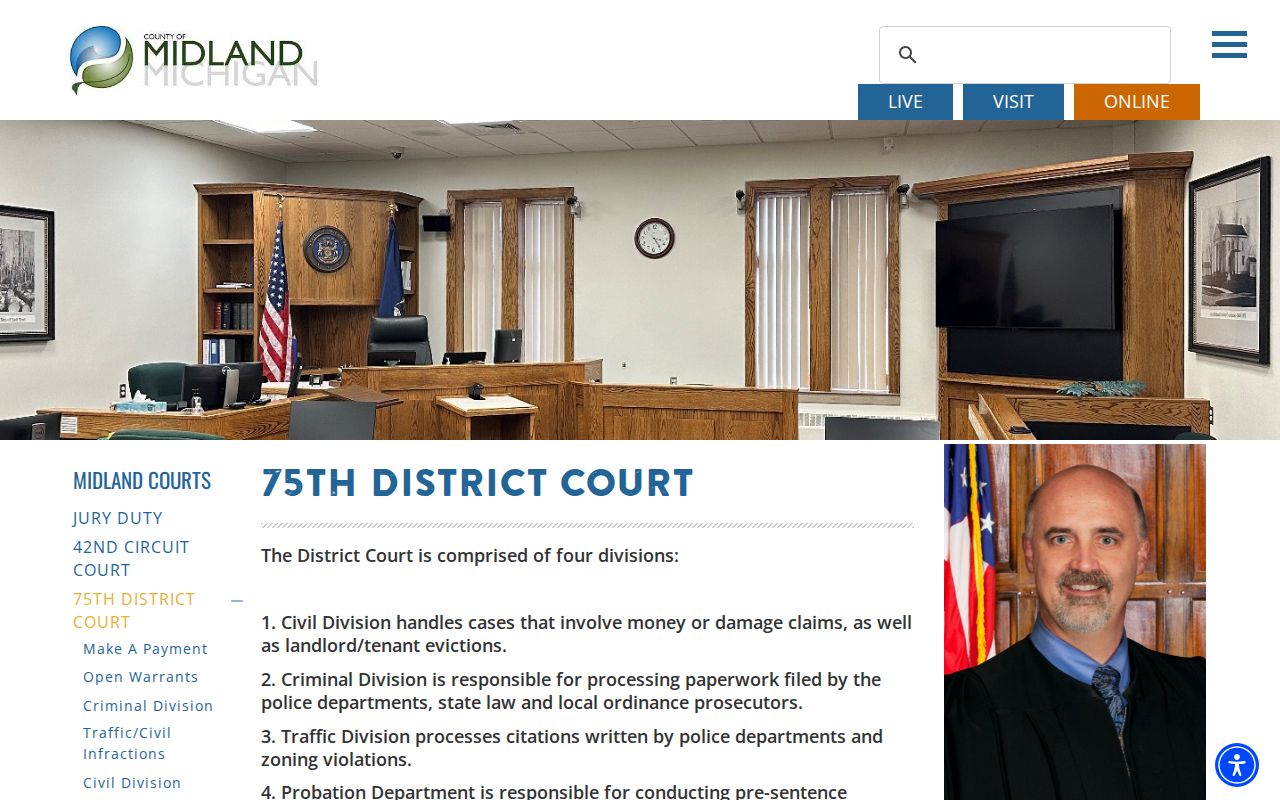
The division label is a routing tool for a Midland County court docket. It is more than a heading on the courthouse directory.
Inside a Midland County Court Docket
Michigan may call the chronological docket a case history or register of actions. It lists activity in sequence. It is not the same thing as a complete electronic case file. A public entry can show that a motion, notice, order, hearing, or disposition exists. The document image may not be online. Read entries in context, starting with the filing and moving toward the most recent order or closed date.
Dates carry different meanings too. A filing date marks when a case or document entered the system. A next-hearing field is a scheduled event, not proof it occurred. A disposition and a closed date may differ. Where a court date matters, compare the case history with the current calendar route. Then confirm with the clerk.
| Case number | A court-assigned identifier commonly paired with a year and case-type code. |
|---|---|
| Caption and parties | The case title and participant roles needed to distinguish similarly named results. |
| Case history | The chronological register of public events, filings, notices, hearings, orders, and corrections. |
| Settings | Upcoming or past hearing information that should be checked against Court Display and the clerk. |
| Court and judge | The venue, court location, and judicial officer fields exposed for the case or event. |
| Disposition | The outcome field, which is more informative than an allegation, charge, or motion title alone. |
Reading Midland County Case History
A few terms keep you from overreading a Midland County court docket. A charge, complaint, petition, warrant, or motion is a process event. It does not by itself establish an outcome. "Scheduled," "heard," "granted," "denied," "dismissed," "disposed," and "closed" are not interchangeable. The final disposition or a later order may clarify an earlier entry. An appeal can shift where the active history lives.
- Case history
- Michigan’s label for the chronological public register of case activity.
- Bindover
- The movement of a felony from D75’s preliminary stage to C42 trial jurisdiction.
- CTN
- A transaction or control-number field shown in the Court Display calendar layer; confirm its local meaning with the court.
- Suppressed
- A public-status indication that can signal limited display, not proof that the court has no file.
- Transcript
- The written record of spoken proceedings, separate from the docket or case history.
This vocabulary matters most when a Midland County court docket lists a future event, a procedural allegation, or a short coded status. The clerk can identify the record process. Legal interpretation belongs with a qualified legal adviser.
Courts That Keep Dockets in Midland County
Midland County's docket map follows jurisdiction and custody, not just the courthouse address. The 42nd Circuit Court is the general-jurisdiction trial court. D75 is the limited-jurisdiction trial court. Probate and Juvenile maintain their own case records. Some categories there often have restricted visibility. What the case is, not which city appears in an address, sets the correct route.
| Court | Docket or record coverage | Practical starting point |
|---|---|---|
| 42nd Circuit Court | Felony trials, major civil matters, domestic relations, and district-court appeals. | C42 route in MiCOURT or the Circuit Court Clerk. |
| 75th District Court | Traffic, civil infractions, misdemeanors, limited civil, small claims, and preliminary examinations. | D75 route in MiCOURT or the District Court Clerk. |
| Probate and Juvenile | Estates, trusts, guardianships, treatment matters, and juvenile work subject to access limits. | Probate Court/Register, with eligibility and access confirmed first. |
| Michigan Court of Appeals | Qualifying appeals from circuit or probate decisions, not the county trial-court docket. | State appellate system after the relevant lower-court route. |
The 42nd Circuit Court’s official page provides the local circuit route.
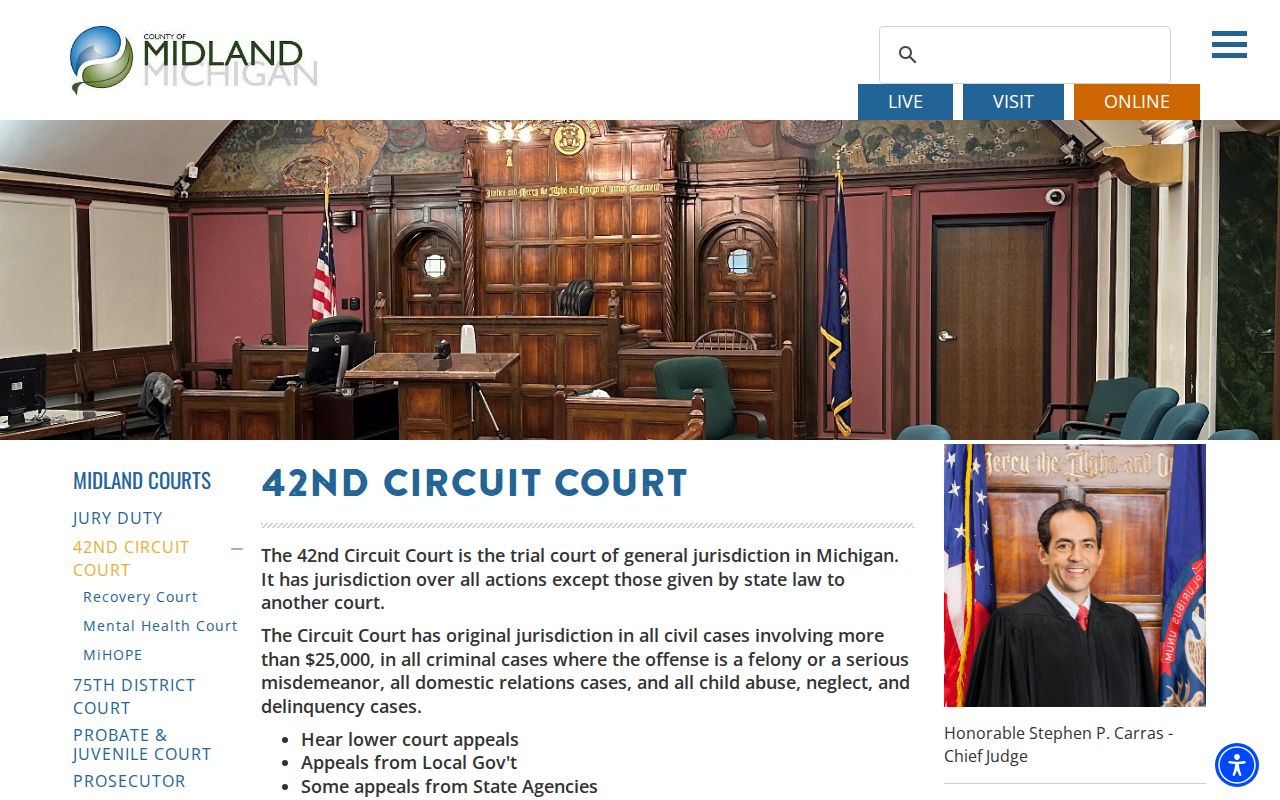
When a felony is bound over from D75, the lower-court activity still counts. The felony trial docket itself proceeds in C42.
MiCOURT and Midland County Dockets
MiCOURT Case Search is the statewide discovery layer for many public Midland County case histories. Enter a name or a case number. Results can expose fields such as court, case type, filing date, status, disposition, judge, participants, and a next-hearing link where one exists. That makes the portal a solid way to locate a case and decide which office to call. Its notice is plain on one point. The portal does not replace the official court record.
Limits exist. The public search can exclude or restrict categories such as juvenile and child-protective proceedings, mental-illness matters, wills, PPO-related categories, adoption, and other sensitive cases. Older criminal information can also be affected by MiCOURT's 7-Year Criminal Sentence Filter. So a blank screen never means "no case exists." The safer next step is to test the relevant court route. Correct any spelling or number issue. Ask the clerk whether the record falls outside online display.
The MiCOURT Case Search portal is the official public starting point for that discovery step.
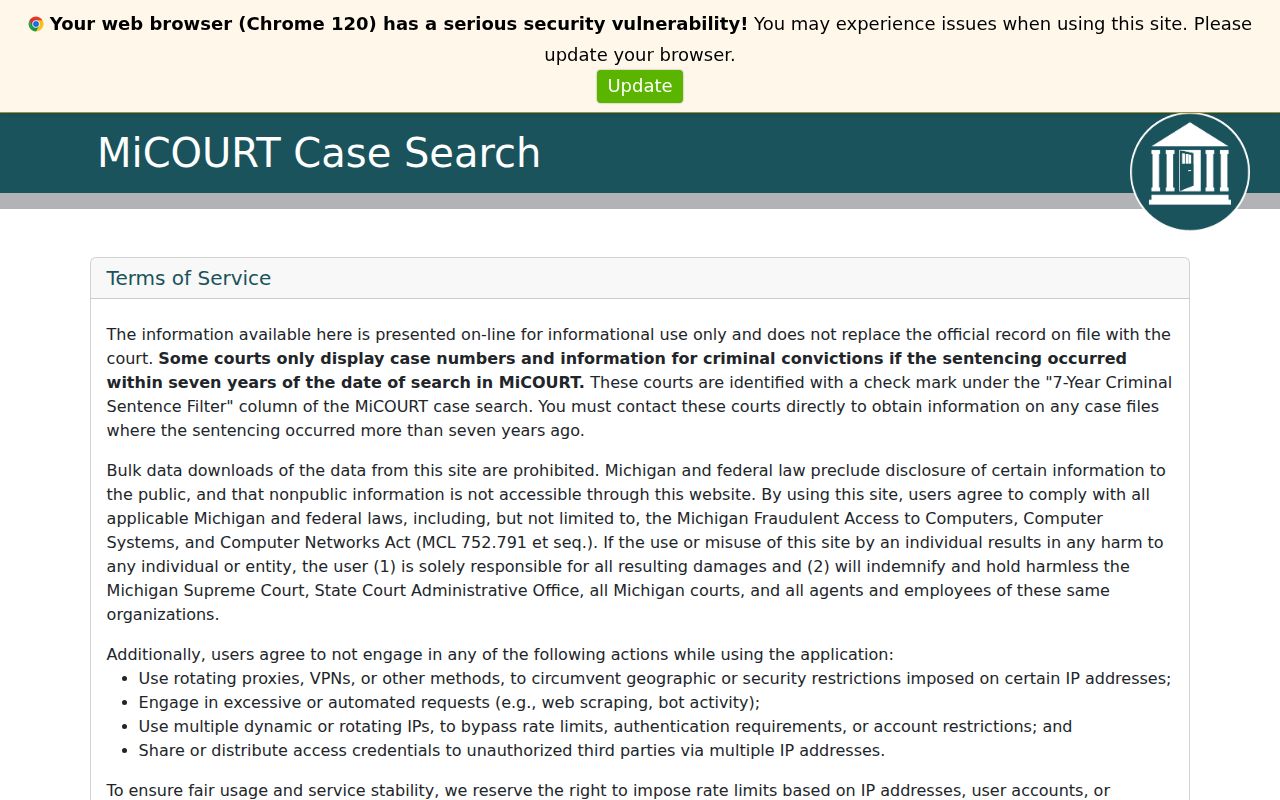
A search result helps identify a Midland County court docket. The court clerk remains the source for certification and for anything beyond the public display.
How to Find Court Dates and Settings
Start with the case history. Then move to the MiCOURT Court Display calendar for a Midland County court docket setting. That pair answers most questions. The county's Court Calendar page works as an official landing page. It offers no stable searchable event table. Court Display is the working public calendar layer. A row can list party name, time, hearing information, case number, and CTN. Treat it as operational, though. It looks ahead to a scheduled event rather than stating final case status.
Adjournments, continuances, and other updates reshape calendars constantly. If the date matters for an appearance, call the division that holds the case. The full Midland County court dates guide explains the confirmation path for calendar results and changed settings.
Midland County Court Display Settings
A Court Display row reads differently. The event date and time fix the setting. Hearing information names the kind of event it is. Case number and CTN tie the row back to the underlying court record. Developer documentation lists more fields. Those include action category and type, courtroom, jurist, public flag, description, and a nested case summary. No public view guarantees every field. A tokenized public display URL can also expire.
A hearing label never decides what happened in a Midland County case. An arraignment, pretrial, preliminary examination, motion hearing, status conference, review, sentencing, or civil-infraction hearing is one scheduled procedural step. Use the entry to locate the case, read the history for later activity, and confirm the setting with the clerk if timing affects a personal matter. The Midland County Courthouse facilities page documents the physical court-access setting behind the calendar fallback.
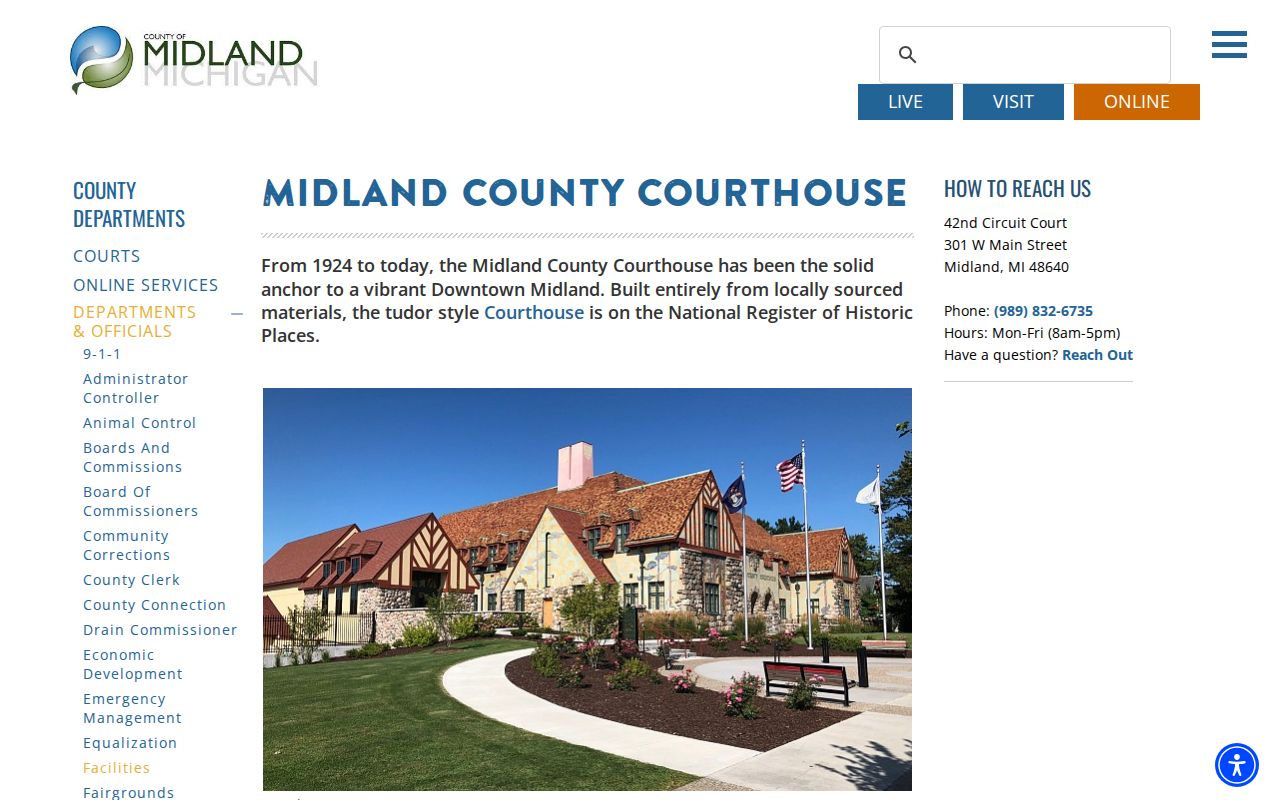
When an online calendar lacks the needed context, the courthouse is the practical fallback. It also serves when a setting needs current confirmation.
Public Access to Court Dockets
Michigan's court-record rules govern these requests. The county's administrative FOIA process is not the normal route for a Midland County judicial case record. MCR 8.119 sets the baseline. It allows public inspection of trial-court case records. A statute, court rule, or court order can still restrict access. The rule also separates the official court record from any online portal. Online access commonly reaches the case number, party names, and case history. A missing document image online is normal.
At the courthouse, an authorized terminal or a clerk request may open additional redacted public material. What you get depends on case type and access level. Inspection is not a copy. It is also not certification or a transcript. If access is limited, ask the court for the rule, order, or statute behind the limit. Ask also whether a redacted version or on-site inspection is available.
Michigan court-record rules:
MCR 8.119 provides the basic public-inspection rule and addresses sealing, nonpublic records, and case-history access.
MCL 600.2546 is cited in current standards for a $1-per-page plus $10-certification framework where applicable; confirm the current amount with the clerk.
MCR 1.109 governs protected personal identifying information that must be handled or redacted under court rules.
MCL 15.232 helps define the public-body boundary; Midland County FOIA is not the normal substitute for a court-clerk record request.
Midland County Online Access Layers
Midland County court docket access runs on three layers. MiCOURT supplies public discovery and case-history information. MiCOURT Court Display adds hearing and setting information. The courthouse and clerk handle inspection, ordinary copies, certified copies, and record categories that never appear online. MiFILE and TrueFiling sit on a different layer entirely: covered filing and e-service, not public docket viewing.
Ask for the narrowest record that solves the problem. A good request names the court and division. It gives the year and case number, the specific item sought, and a date range where needed. State a preference too: inspection, ordinary copy, certification, electronic delivery if available, pickup, or mail. Leave out sensitive data the request does not need. For spoken proceedings, use the county's transcript request route rather than asking for the docket.
The county's courthouse security information explains the building's entry and inspection procedures.
Confirm entry and record procedures before any courthouse visit.
Docket Records at the Clerk's Office
Match the clerk to the court. The 42nd Circuit Court Clerk's Office handles circuit civil, criminal, family, judgment, appeal, certified-copy, and transcript-routing questions. The D75 clerk keeps district civil, criminal, traffic, and probation case records. Probate and juvenile files live with the Probate Court/Register. Access there may be more restricted. Do not send a court-file request to the County Clerk's general administrative office just because both functions sit inside county government.
The offices at 301 W Main Street share a courthouse. They do not share one undifferentiated case file. A records request should name the court. Add the case number and year when known, the document or history requested, and whether a certified copy is needed. The standard fee framework is $1 per page plus $10 certification where applicable. Official sources carry differing historical fee language, though. Confirm the current fee with the clerk before payment.
The Midland County Probate and Juvenile Court page identifies the separate probate route.
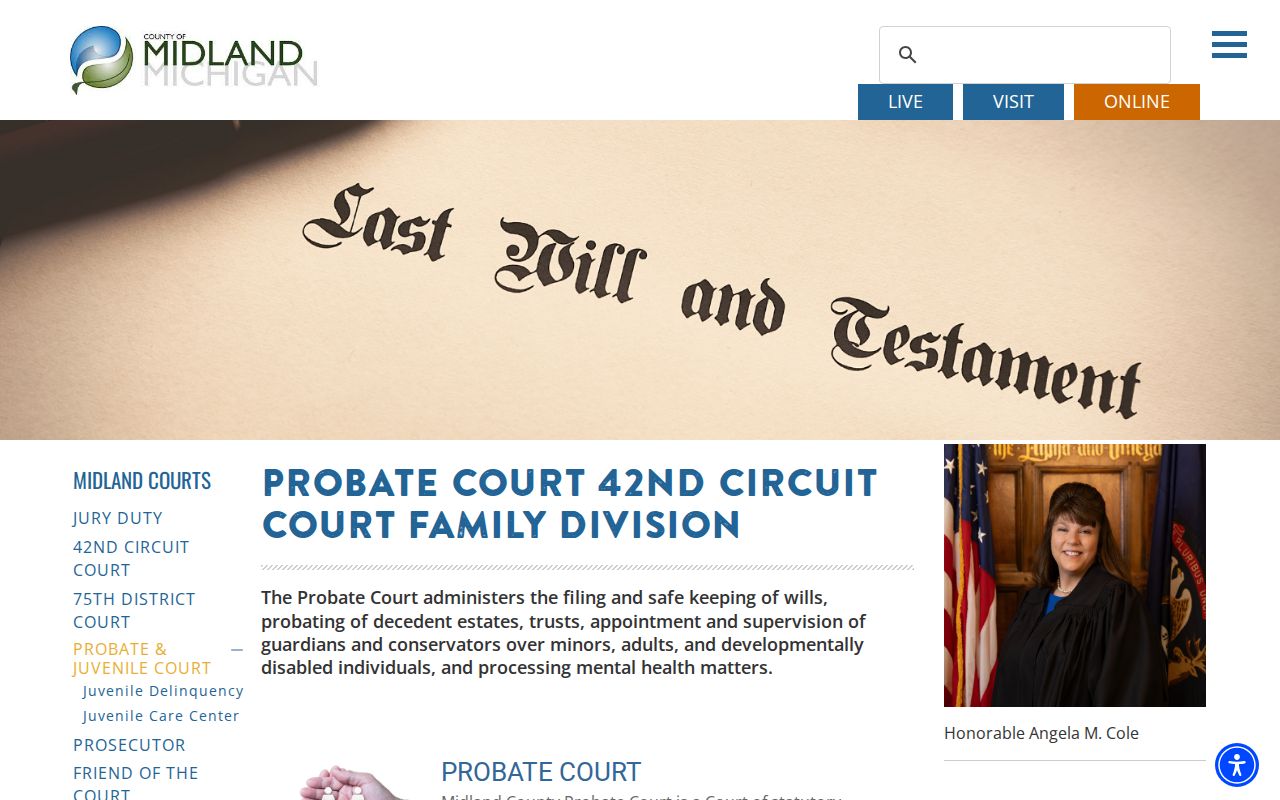
Probate and juvenile case histories need their own access inquiry. Never assume that the ordinary rules for a Midland County civil docket carry over.
Historic Midland County Court Records
MiCOURT covers the modern era only. Older Midland County court records live in the Archives of Michigan. Its guide spans more than a century of filings. The circuit common rule books run from 1857 to 1924. Estate case files reach from 1858 to 1967, probate calendars from 1863 to 1970. A probate index stretches even further, 1856 to 1999. Digging into that history often takes a name index, a volume and page, or an archival request. A modern case number may not be enough. For newer and current cases, the local court clerk is the starting point.
State and federal systems stay separate, too. A federal civil or criminal matter tied to Midland County never lands in MiCOURT. It never lands in a county clerk file, either. Midland County sits in the Eastern District of Michigan’s Bay City place-of-holding grouping. Federal docket reports and documents move through PACER and CM/ECF instead. Keep that line in mind. A state docket search can come up empty for a proceeding you know exists.
The U.S. District Court for the Eastern District of Michigan spells out the federal courts serving the area.
A Midland County address can surface in a federal case, yet the federal record still never becomes part of the Midland County court docket. The PACER service is the official route for federal docket reports and documents.
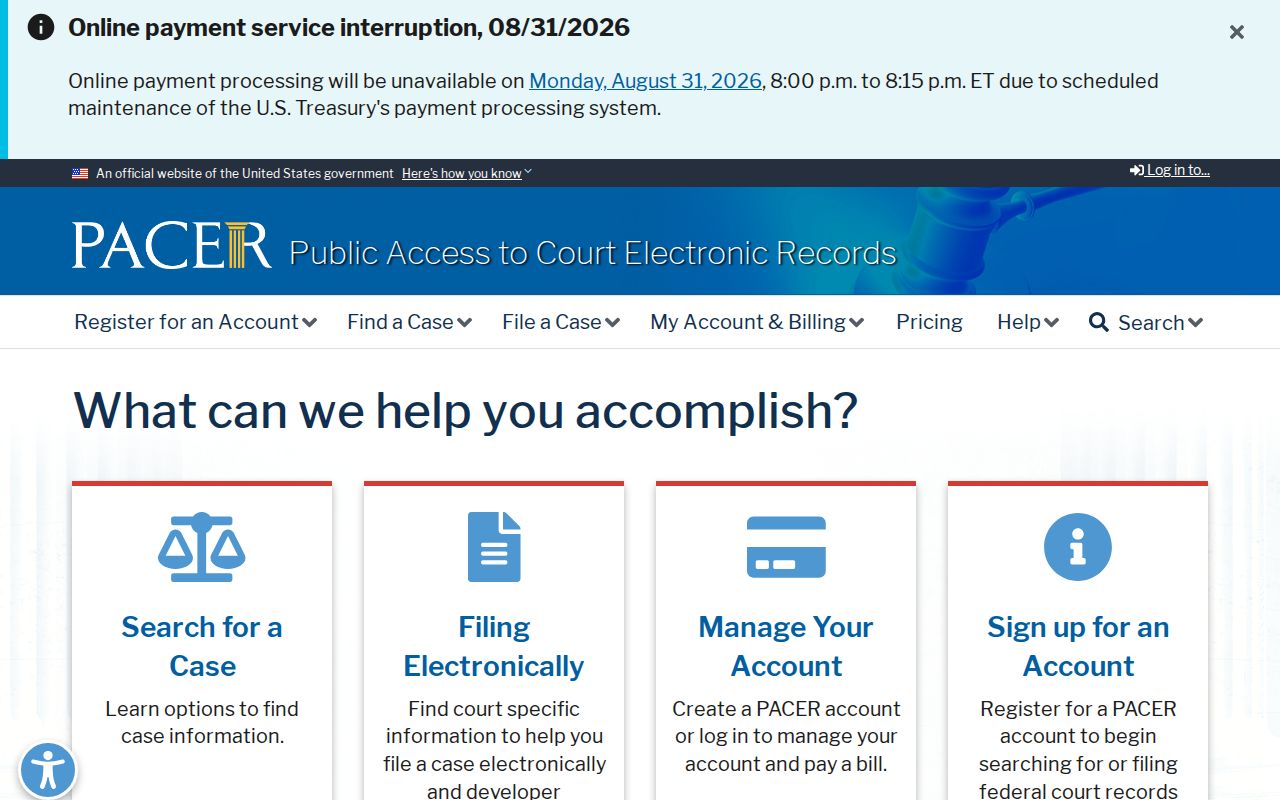
Keeping state and federal straight saves a searcher from starting a Midland County docket hunt in the wrong system entirely.
MiFILE and Midland County Filings
MiFILE and TrueFiling handle filing and e-service. Neither one replaces MiCOURT’s public case history. Midland’s D75 adopted MiFILE on October 31, 2024, and it covers General Civil GC/GZ, Small Claims SC, and summary-proceeding LT/SP categories. For those matters, the system changes how filings and service move through the court. It does not put every pleading online as a public image. Nor does every D75 case type use MiFILE.
The split is deliberate. A public case history may show that an event occurred, while the document itself stays subject to Michigan’s access rules and the court’s record process. Midland even shows up in a state release note, because a local suggestion concerned how a judgment amount displays beside an event. The lesson is simple. A docket’s display can evolve even when the office holding the record and the access rules stay the same.
So use MiFILE for covered filing work. Turn to MiCOURT or the clerk when the goal is to locate or request a Midland County court docket record.
Midland County Court Dockets by City
Midland County counts three incorporated places in the 2020 Census ranking: Midland, Coleman, and Sanford. Each place may keep city or village administrative records, notices, or parking processes. None of them runs its own municipal court. The official county and state sources say so. The case type decides the court. A judicial case routes to D75, C42, or Probate. Ask the local office first about a city-held notice. Then switch to the county court route. Do this once a court citation or case number is assigned. The 2020 Census incorporated-place table lists the county’s complete three-place ranking.
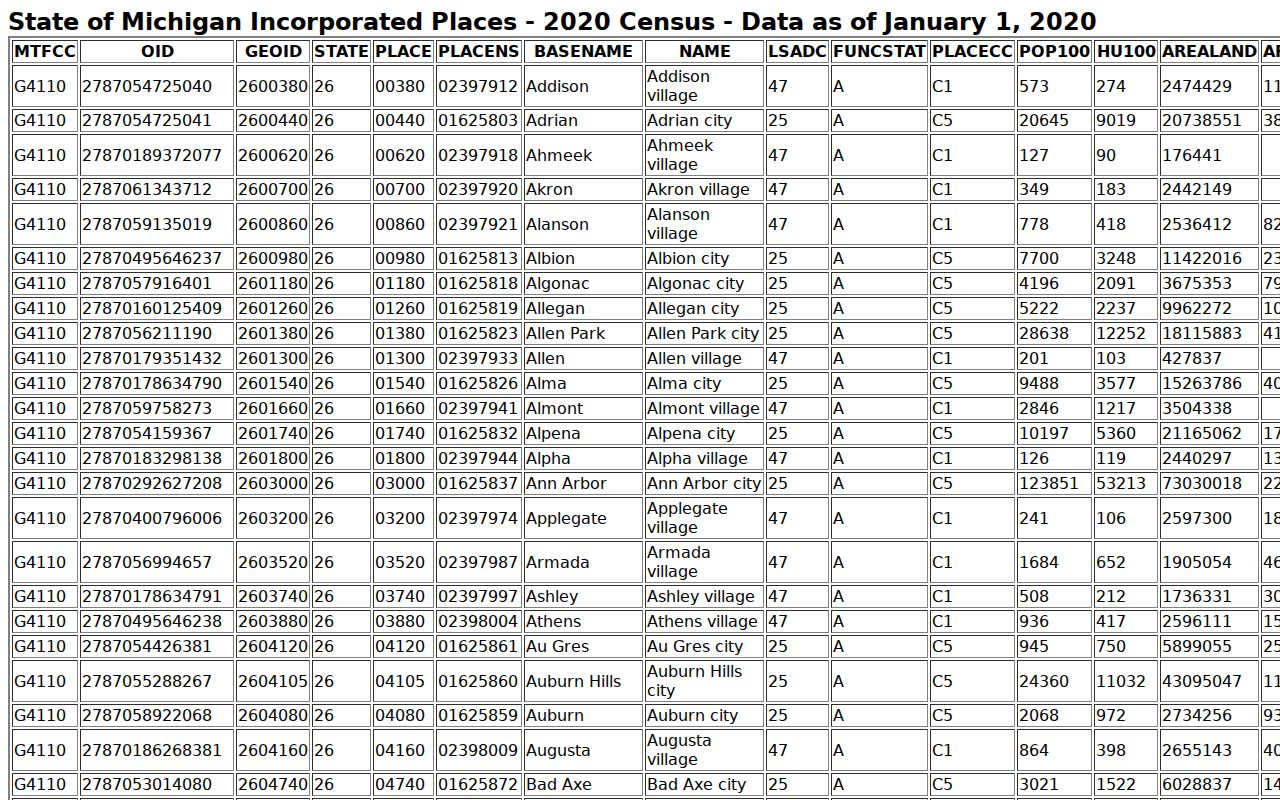
Each city entry distinguishes a municipal starting point from the Midland County court docket that may follow a filed case.
Midland Docket Search
42,547 in the 2020 Census. City parking and ordinance records can be city-held before a filed court matter reaches D75.
Coleman Docket Search
1,262 in the 2020 Census. A Coleman parking notice can remain with the city bureau unless an unpaid matter becomes a D75 citation.
Sanford Docket Search
813 in the 2020 Census. Village-held material starts with Sanford; a filed judicial matter uses the applicable Midland County court.
Map and Directions to the Midland County Courthouse
The 42nd Circuit Court's felony, civil, and family files, the 75th District Court's civil, criminal, traffic, and probation dockets, and the Probate Court's estate and juvenile matters are all kept at the Midland County Courthouse, 301 W Main Street, in downtown Midland. Probate Court is on Level B. Visitors enter through a concourse entrance for a single security-screening point that covers all three courts.
Midland County Courthouse
301 W Main Street
Midland, MI 48640
(989) 832-6735
Monday through Friday, 8:00 a.m. to 5:00 p.m.
The courthouse is a weapons-free zone: security screens every person, bag, and parcel, and firearms, knives, chemical weapons, clubs/bats, and explosives are prohibited, with recording devices flagged in jury instructions. Free parking sits behind the courthouse, with additional Main Street and river-side entrances; posted jury guidance warns of a three-hour limit on Main Street parking and advises against using the nearby H Hotel lot.